Sales · Data
Lead-generation platform
Captures, qualifies and routes local trade leads to a business in seconds.
- Status
- Working prototype
- Built with
- Claude Code, Cursor
- Stack
- Next.js, TypeScript, PostgreSQL, Node.js worker, Playwright tests
- Timeframe
- Oct – Nov 2026
In 30 seconds
- The problem
- Local trades waste money on leads that are fake, slow to arrive, or sold to five competitors at once.
- What it does
- A pay-per-lead platform that screens each enquiry, routes it to one business by clear rules, and delivers it within seconds.
- Where it's at
- Six of ten planned stages are built and tested on my Mac, for roofing, boiler and electrical trades. It has not been launched.
Walkthrough
- Enlarge screenshot:
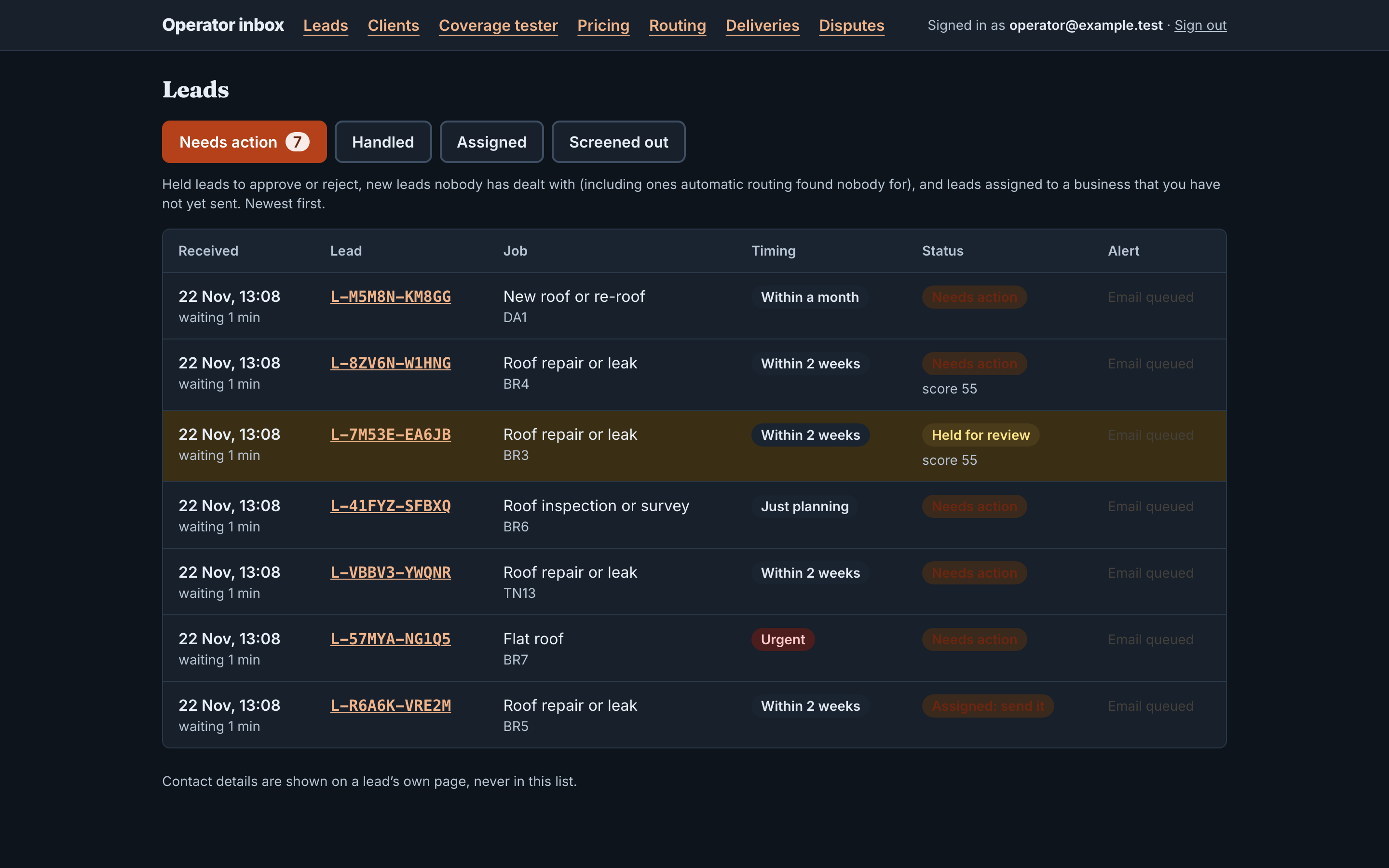
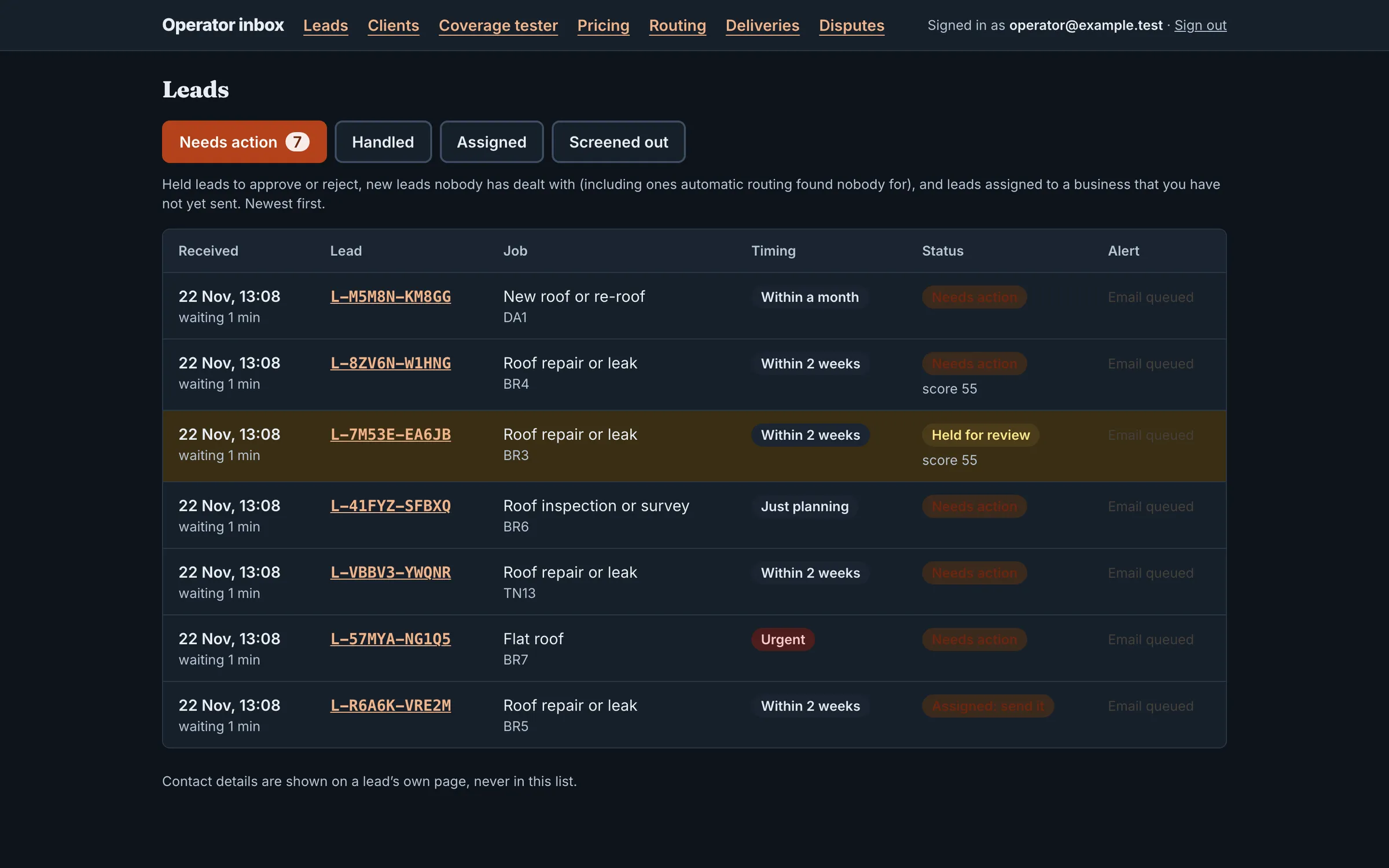
The operator inbox: suspicious enquiries are held for review before any business sees them. - Enlarge screenshot:
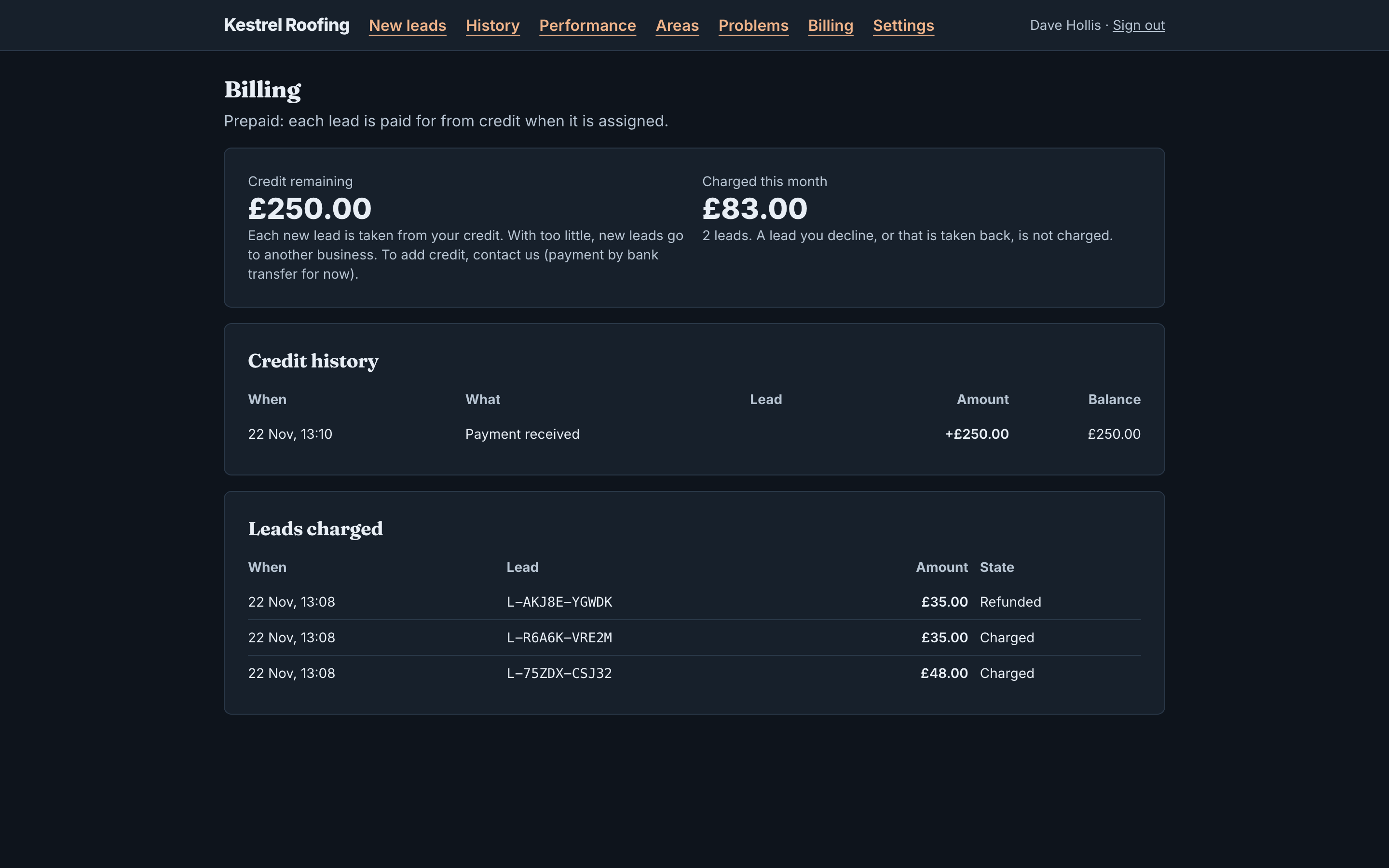
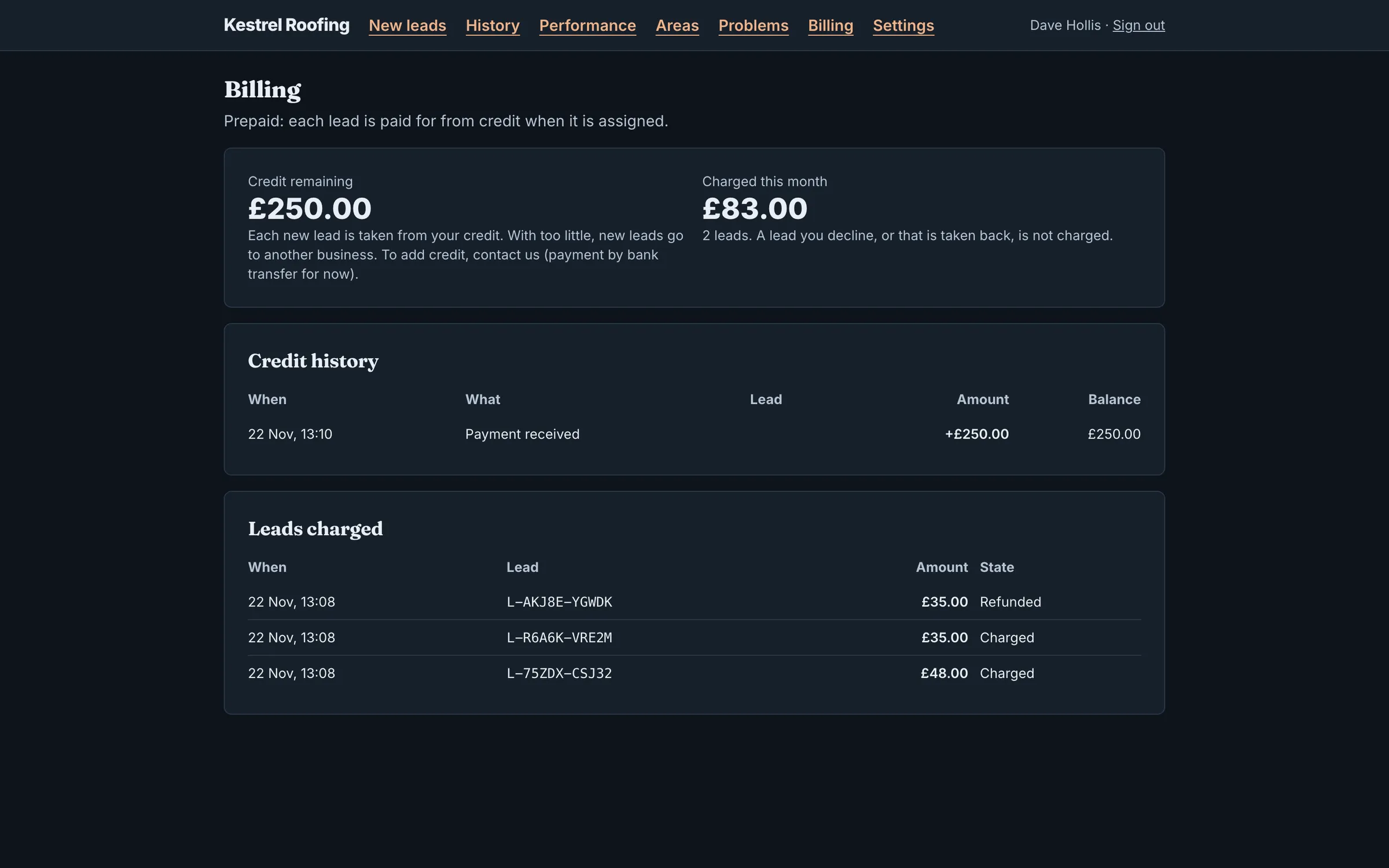
The business's billing: prepaid credit, a charge per lead, and refunds when a dispute is upheld. - Enlarge screenshot:
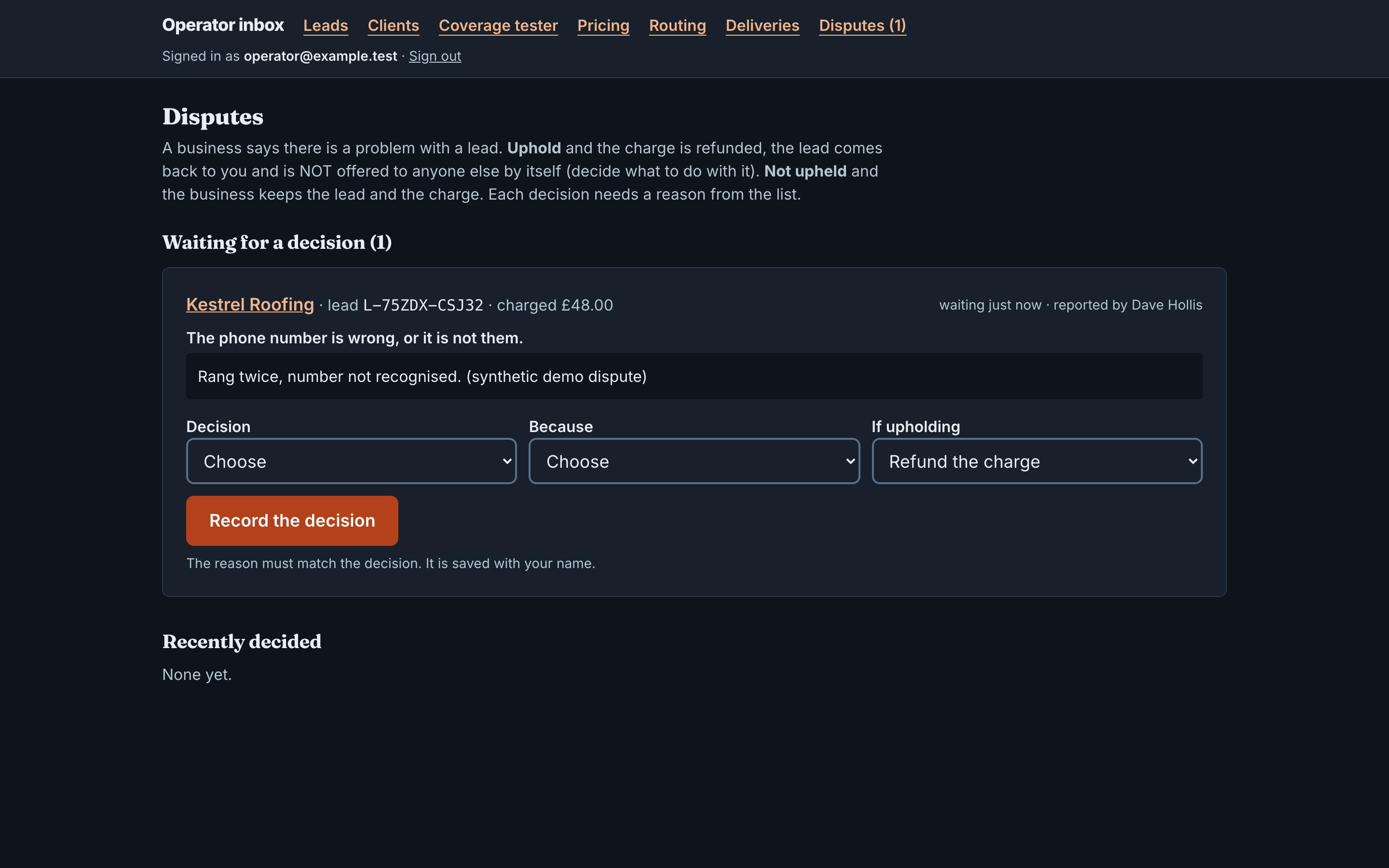
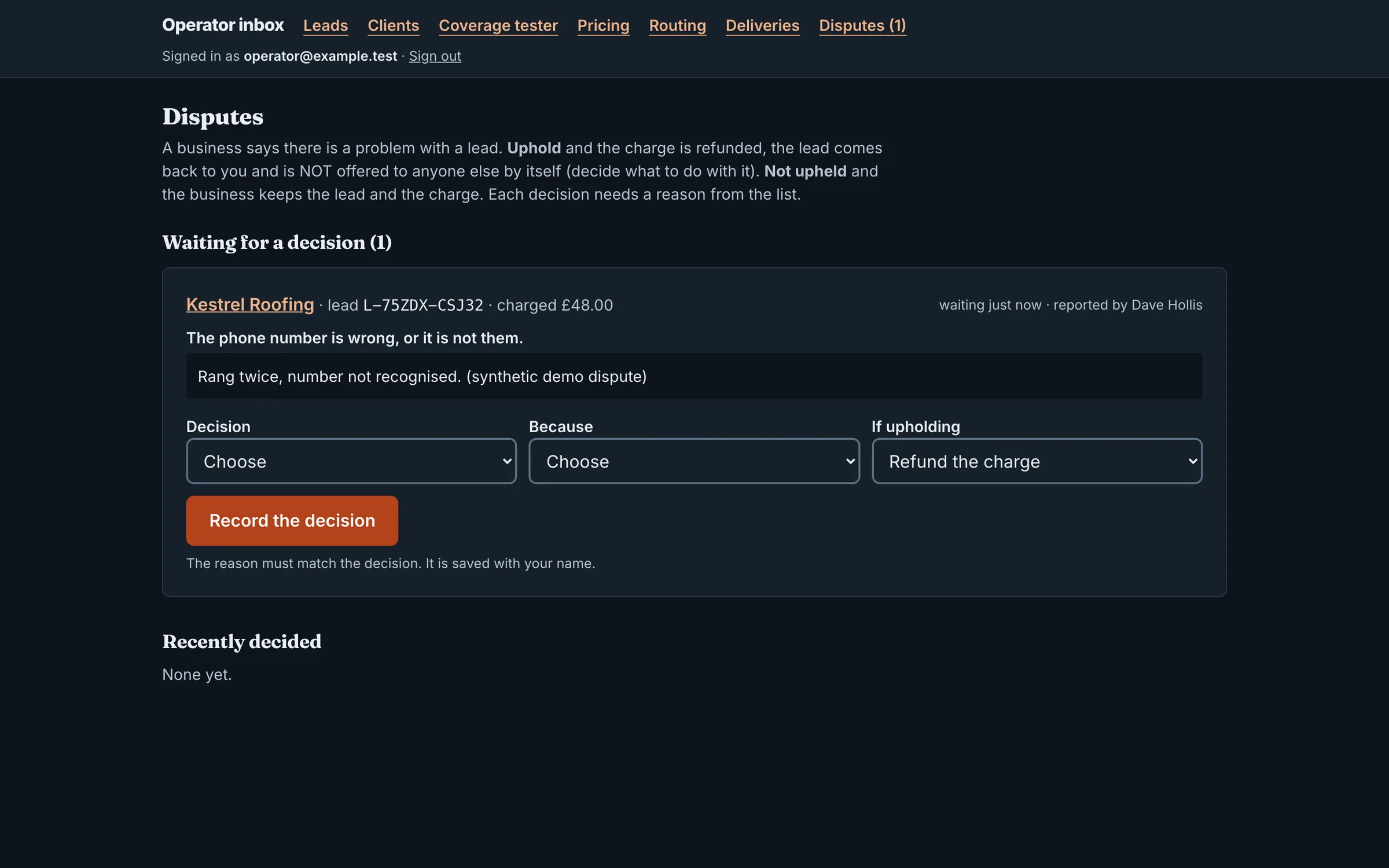
Bad leads can be disputed within seven days, and every decision needs a reason.
How I built it
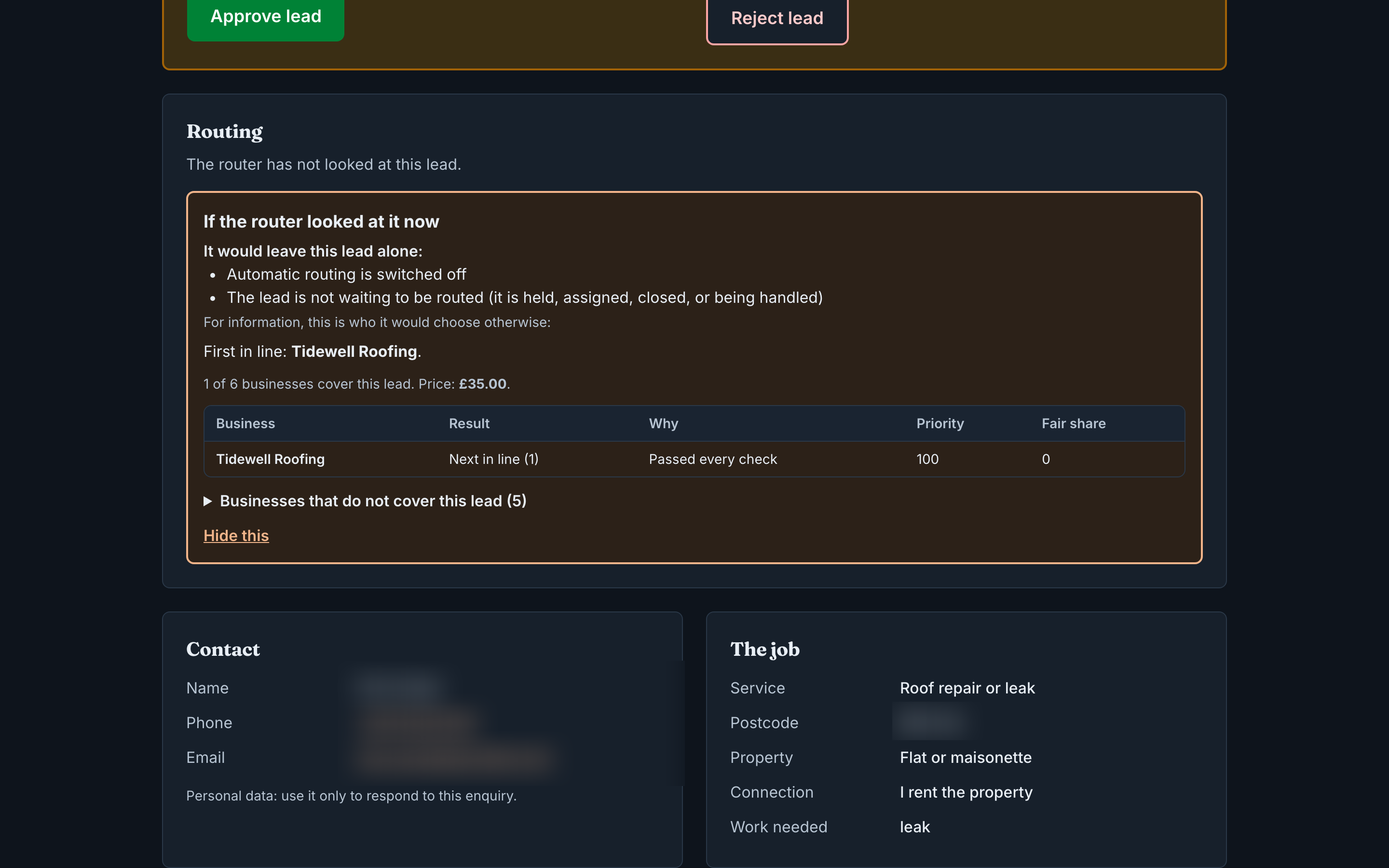
A homeowner fills in a six-step form on their phone. Before any business sees the enquiry, the platform validates it, removes duplicates, and scores it from 0 to 100 on 17 fraud signals: a form completed in under five seconds, a disposable email address, the same phone number used again, and so on. The score decides whether the lead is accepted, flagged, held for a person to check, or rejected.
A rules engine then picks one business for the lead. The rules cover priority, a fair share by weight, daily and monthly caps, working hours and pauses. A “Who would get this lead?” dry run shows the decision and the reasons before anything is sent. The business is told by email, SMS or webhook. In tests, all three went out within five seconds of assignment.
Each business gets its own dashboard. It can accept or decline a lead, log the call, top up prepaid credit, and dispute a bad lead within seven days. A lead that nobody accepts comes back after two working hours. If no business has spoken to the homeowner after eight working hours, the homeowner can ask for a different business, but only if they agreed to that.
In local tests, 12 identical submissions sent at the same moment produced exactly one lead. 90 leads shared across six routing workers were never assigned twice.
I wrote the brief and the stage plan, and made the commercial calls: exclusive leads by default, flat per-lead pricing with the most specific rule winning, a seven-day dispute window, and consent evidence on every lead. Claude Code built the original roofing app. Boiler and electrical are adaptations of it, and later changes were made in Cursor. Payments, analytics and a public launch are not built.
What I learned
- Speed decides a lead’s value. The recovery rules exist because an unworked lead is wasted money for everyone.
- Fair routing is harder than it sounds. Caps, working hours and fair shares interact, so every decision is stored with its reasons.
- Consent and audit trails are part of the product, not paperwork added at the end.
- Pricing has to be explainable. If a customer can’t predict what a lead will cost, they won’t trust the bill.
Why it matters in a sales seat
Speed to lead, qualification and fair routing are what make an SDR team work. Building them end to end showed me the economics of a pipeline from the vendor's side.